




- Currency futures struggle as the risk-off sentiment prevails, pushing the dollar up.
- Rising energy prices keep the risk assets like the Euro, Pound, and Aussie under pressure.
- Traders await Friday’s US NFP data for fresh impetus.
Currency futures remain struggling as the US dollar stays strong near a two-week high on Monday, with the US Dollar Index futures (DX) staying between 100.15 and 100.35. The move occurred as tensions were rising in the Middle East, turning investors to safe-haven assets and also making markets rethink the Federal Reserve’s policy path.
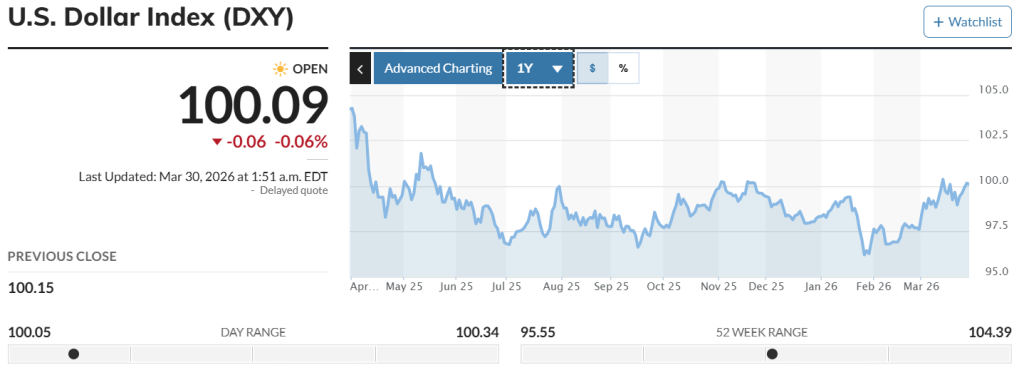
After reports came out that the US could get more involved in Iran, investors moved into the dollar. This raised fears of a wider conflict in the region. A decline in equity futures strengthened the risk-off mood. In Asian trading, S&P 500 futures (ES) fell, while WTI crude futures (CL) rose sharply above $102 a barrel, increasing concerns about inflation.
Traders are lowering their expectations for rate cuts this year as energy prices are escalating. Futures markets are now pricing a higher chance of at least one rate hike by the end of the year. This change in expectations for rates has kept the dollar strong across the board, making it hard for currency markets to recover.
In the euro complex, Euro FX futures (6E) stayed close to the 1.1500 level after hitting a one-week low earlier in the session. But gains stayed limited due to ongoing geopolitical risks and rising US yields, which continued to favor the dollar. Market participants remained cautious, viewing any gains as a selling opportunity unless tensions clearly eased.
The British Pound also fell, with British Pound futures (6B) falling to 2-week lows near 1.3240. Even though the Bank of England’s hawkish stance helped the pound recently, it was hard to get buyers as market participants were afraid of risk and the stronger dollar.
At the same time, Australian Dollar futures (6A) fell to about 0.6850, which is considered a gauge for global risk sentiment. The currency was still one of the weakest among major currencies as falling stock markets and uncertainty about world events hurt risk-linked assets.
Japanese Yen futures (6J) traded in a fairly small range in Asia. Demand for safe havens helped a little, but the Bank of Japan’s cautious approach to policy normalization kept the currency from moving as much as it had in previous risk-off periods.
Traders are now looking ahead to the US Nonfarm Payrolls report that will come out later this week. The report is expected to provide further information about the Fed’s policy outlook and could cause the next round of movement in currency futures markets.