



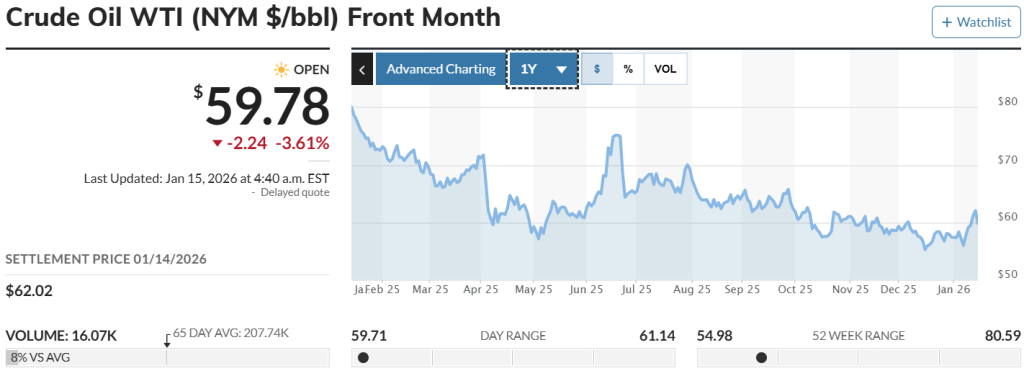
- Crude oil futures remain under pressure, trading below $60.00, as headline risks subside.
- Recent EIA inventory data raise concerns about supply, but China’s increased demand partially offsets the risk.
- Prices are expected to remain between $55 and $65, with persistent risks stemming from Iran’s political situation.
Oil is being pulled between fading headline risk and still‑elevated geopolitical uncertainty. On Thursday, prices swung sharply lower, with Brent and WTI dropping more than 3%. This came after comments from President Trump suggesting killings in Iran’s protests were easing and that Washington was not on the verge of military action.
That took some heat out of the risk premium that had built around possible disruption to Iranian output and traffic through the Hormuz Strait. For now, traders see the unrest as a sentiment driver rather than an immediate threat to the 2–3 million barrels per day Iran pumps or the nearly 20 million barrels that transit the strait each day.
The fundamentals are leaning slightly bearish. Last week, US crude inventories rose by about 3.4 million barrels to 422.4 million, above forecast. Gasoline stocks also rose by about 9 million barrels. These builds suggest that demand will be weaker in the near future, increasing supply concerns.
The EIA also noted a slight decline in US production but a significant increase in imports. Venezuela is also increasing its exports as it ends previous cuts and resumes shipments. These factors, taken together, indicate a significant global supply.
There are certain offsets on the demand side as well. In December, China’s crude oil imports increased by 17% compared to the same month the previous year, with daily volumes reaching record highs.
OPEC’s most recent forecast suggests that the market will be mostly balanced in 2026, not in a deep surplus. That helps explain why WTI tends to stay in the mid-$50s to low-$60s range, and Brent tends to stay in the mid-$60s range, even though they fluctuate significantly during the day. For now, many analysts believe that WTI will remain between $55 and $65 per barrel.
Iran’s chaos and regional politics will have a significant impact on the future outlook. Prices would likely rise and remain high if Iranian production, export facilities, or shipping through the Strait of Hormuz were to be disrupted. If protests remain calm and US inventory data indicate a good supply, trade will likely be choppy and range-bound, with gains when tensions rise and losses when fears subside or new barrels enter the market.