



- Gold futures turn higher after US midterm election results, pushing above the $4,000 mark.
- Upcoming US jobs data could be decisive for the gold recovery, as the data could shape Fed policy expectations.
- Geopolitical uncertainty and institutional buying keep the bullion’s downside limited.
Gold futures are recovering after plummeting from a record high of $5,595 an ounce in January. On November 4, spot gold traded around $4,000, up about 1% amid a weaker US dollar and falling Treasury yields. However, the broader fundamental picture remains mixed, with monetary policy, geopolitical developments, and institutional demand shaping the market outlook.
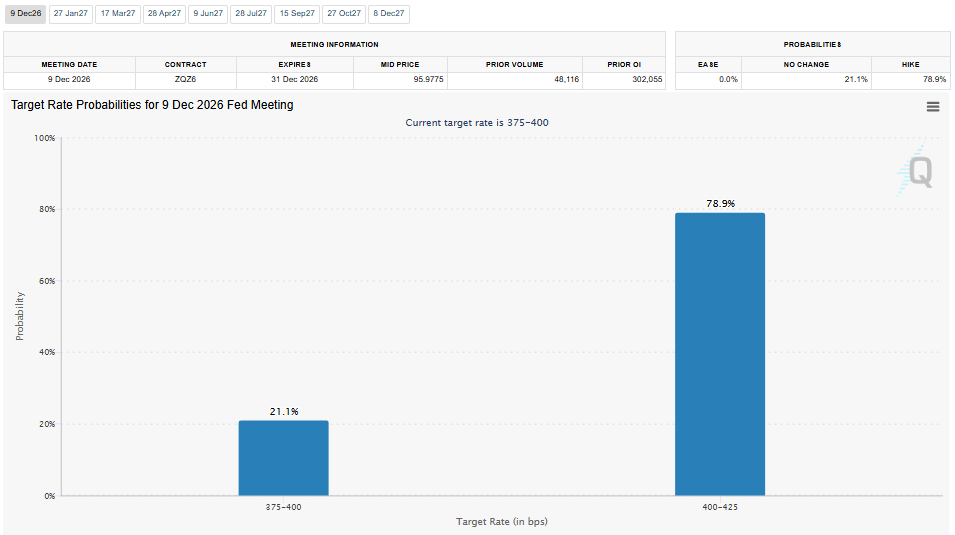
The key driver for gold continues to be the Federal Reserve’s interest-rate outlook. The market is pricing in a 78% chance of a December rate hike. Higher interest rates tend to raise the opportunity cost of holding non-yielding assets, capping investment demand for gold.
The US Nonfarm Payrolls report on Friday will also provide investors with clues about Fed policy expectations. Stronger employment figures could support expectations for tighter monetary policy, whereas softer numbers could revive gold’s bullish momentum. Economists are forecasting 65,000 new jobs in October following a weak September gain of only 29,000. A stronger-than-expected reading may reinforce expectations of further monetary tightening, bolstering the US dollar and Treasury yields and putting pressure on gold.
On the other hand, underlying support remains due to geopolitical uncertainty. The unresolved US-Iran conflict continues to haunt markets, with persisting uncertainty due to the lack of a conclusive agreement. Meanwhile, US election results leave further political uncertainty. Early Democratic gains have helped weaken the dollar and drag down Treasury yields, supporting gold prices. Renewed tensions in the Middle East could also drive more safe-haven demand.
Moreover, interest from institutional investors remains strong, according to the World Gold Council’s latest Q3 2026 report. Central banks’ gold purchases came to around 321 tons in Q3, marking a 42% YoY increase. In addition, physically backed gold ETFs saw inflows of around 211 tons over the quarter. However, the Council has lowered its forecast for growth in annual investment demand to 200 tons from 400 tons, reflecting weaker bar and coin buying.
Hence, the $4,000 psychological level continues to be a key resistance zone. A decisive break above here could gather traction for bulls. Still, given the rebound in the dollar and a potential return of hawkish Fed rhetoric and noisy economic data, we could be headed for another corrective phase.