


- Last week, market focus shifted slightly from the war to earnings.
- Iran offered a new proposal to reopen the Strait of Hormuz.
- The Fed will meet this week and likely keep interest rates unchanged.
Equities hit record highs on Monday amid optimism ahead of earnings reports from the Magnificent Seven US companies. However, uncertainty about US-Iran talks and the war kept a lid on gains. Meanwhile, market participants are looking forward to the FOMC policy meeting later this week.
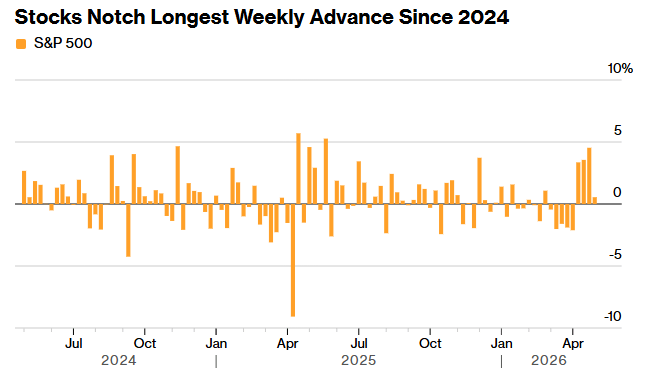
S&P 500 Weekly performance (Source: Seeking Alpha)
Positive stocks recorded another week of gains despite an escalation in tensions between the US and Iran. The gains came as focus shifted slightly from the war to earnings. Analysts have forecasted strong reports in the first quarter that will likely boost the equities market. This week, major companies, referred to as the Magnificent Seven, will release their reports. Solid earnings will propel the S&P 500 to new all-time highs.
However, although market focus has shifted, war uncertainty still clouds sentiment. Last week, tensions grew after Iran seized two ships in the Strait of Hormuz. The next day, the US captured a tanker in the Indian Ocean that was carrying Iranian oil. It became clear that the two countries were still far from ending the war.
Still, market participants remained hopeful that weekend talks in Pakistan would yield good results. However, the planned talks never happened as Trump said the Iranian leaders were still too confused. According to him, Tehran’s leadership needs time to come up with a unified proposal to end the war.
Reports on Monday revealed that Iran had offered a new proposal to reopen the Strait of Hormuz. Their condition is that the US put an end to the blockade of the Strait. It is still unclear what this new development will lead to. If talks stall for longer, oil prices will keep climbing, fueling inflation worries.
Market participants also paid attention to economic data last week, showing solid consumer spending. US retail sales increased by 1.7%, beating the estimate of 1.4%. Strong spending is beneficial for businesses. However, it also puts pressure on the Fed, which is currently watching to see whether the economy is overheating amid rising oil prices.
The Fed will meet this week and likely keep interest rates unchanged. Traders will focus on remarks about the war and future interest rate moves. If policymakers lean more hawkish, equities will pull back. High borrowing costs hurt businesses.