


- Crude oil remains steady as geopolitical worries counterbalance the oversupply dynamics.
- The US-Iran tensions keep the markets elevated amid the war premium.
- Increased supply from OPEC+ and surging US stockpiles limit the oil rallies.
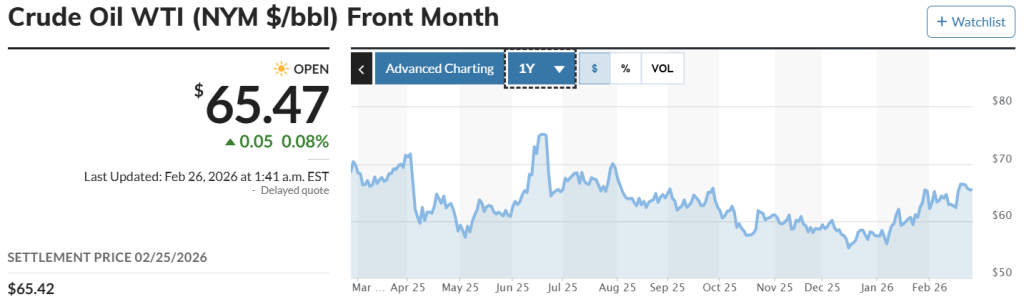
Crude oil prices remain steady on Thursday, stuck in a volatile deadlock between rising tensions in the Middle East and a massive surplus in US stockpiles. Brent futures, used as a global benchmark, are around $71.00 a barrel, while West Texas Intermediate (WTI) traded around $65.50.
Traders are currently adding a hefty “war premium” to prices ahead of the high-stakes third round of nuclear talks between Washington and Tehran in Geneva. This is because markets are worried that a breakdown in diplomacy could lead to immediate supply problems in the Persian Gulf.
Geopolitical risk remains the primary driver of the price rise, pushing to a seven-month high of $72.50 earlier this week after President Trump warned about it in his State of the Union address. Saudi Arabia has reportedly begun making backup plans to boost exports in the event of shocks. OPEC+ sources say the cartel is preparing to raise production by 137,000 barrels per day in April to meet summer demand.
Bearish fundamentals in the United States, on the other hand, are making these supply worries less critical. Last week, US crude inventories grew by an incredible 16 million barrels, the highest in three years and far more than the 1.5 million barrel forecast. This shows that physical markets are highly oversupplied, even with the fear trade.
Meanwhile, changes in the structure of Chinese demand are altering global flows and putting a ceiling on prices, even though the headline numbers remain the same. The world’s biggest importer is limiting purchases of expensive Brent-linked grades, mainly from West Africa, to keep the market in check. Due to this drop, Nigerian and Angolan sellers have had to raise their discounts to $5 a barrel against Dated Brent, up from $3 earlier this month, to sell their cargoes.
Instead, Beijing is quickly moving toward discounted Russian Urals, which India has been buying less of because of trade deals, and Saudi Arab Light, which is priced competitively. This strategic move shows how China’s power is growing as it effectively stops global rallies by refusing to chase prices higher and instead using the fungibility of crude grades to keep import costs down.

