


- Crude oil futures remain under intense selling pressure amid strong global supply conditions.
- Russia-Ukraine peace deal could further boost oil supply after US sanctions are reversed on Russian companies.
- The US blockade of Venezuelan oil has added chaos to the market, providing slight support to oil prices.
Crude oil futures are trading around the $56.00 level, as the markets face pressure, balancing shifting geopolitical risks against a globally well-supplied oil market. The initial weakness suggests that increased expectations may exist for Russia and Ukraine to soon reach a peace agreement, which could result in the reversal of US sanctions on Russian energy firms, potentially adding more Russian barrels to the market and increasing supply pressure.
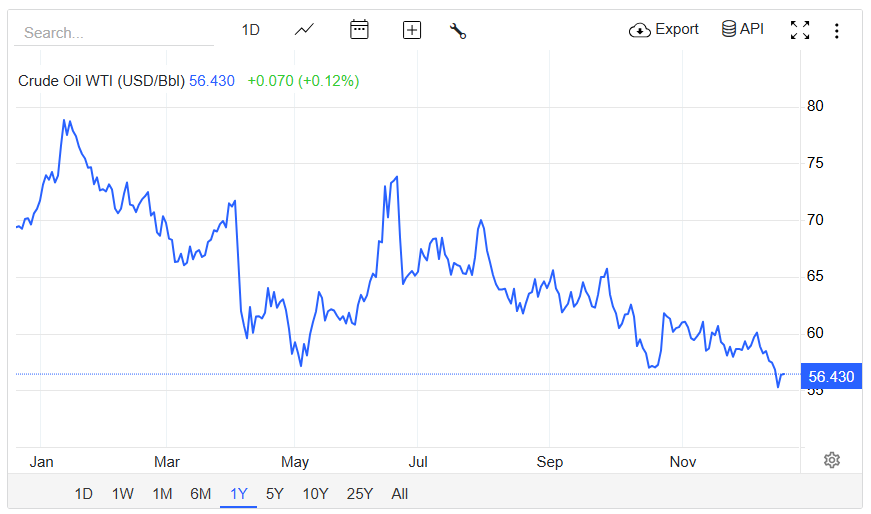
Analysts believe that a settlement would likely mean no more Ukrainian attacks on Russian oil infrastructure, coupled with a reversal of US sanctions on Russian energy companies. This has heightened bearish sentiment, especially since global crude balances already show a surplus.
The buildup of unsold Russian Urals crude in China underscores this dynamic. At least five tankers, each carrying roughly 3.4 million barrels, are idling in the Shandong province area, the highest number in over five years. As Indian demand sharply declines due to tighter US scrutiny and sanctions on producers such as Rosneft and Lukoil, Russian sellers are actively seeking alternative buyers in East Asia, often at significant discounts.
However, downside pressure on WTI has been partly offset by new supply risks from Venezuela and the possibility of additional sanctions against Russia, highlighting the ongoing geopolitical risks that energy market participants should closely monitor.
Further support has come from reports that the US is drafting new sanctions targeting Russia’s energy sector if Moscow does not reach a peace deal. According to Bloomberg, these actions might target Russia’s shadow fleet and trading networks used for transporting sanctioned crude. ING analysts suggest that stricter Russian sanctions could pose a greater threat to supply than the Venezuela blockade, as Urals crude is now concentrated on finding buyers.
On the other hand, limited support also stems from recent inventory data. The latest EIA report showed a decrease of 1.274 million barrels in US crude stocks, surpassing market expectations of a 1.1 million barrel draw. Although the decline is smaller than that of the previous week, it indicates consistent demand and tighter balances in the US market in the near term.
Meanwhile, the release of the US Consumer Price Index (CPI) adds a key variable. An overheated CPI could strengthen the dollar, increasing pressure on crude prices by raising expectations of tighter monetary policy. Conversely, lower inflation would weaken the dollar and support oil demand, which could boost crude prices.e prices.