




- Currency futures tumbled as the week started amid safe-haven flows after the US attack on Iran.
- Euro, pound, and Aussie futures stay under intense selling pressure, while CAD remains comparatively stable amid higher oil prices.
- Markets await US PMI and NFP data for more directional bias.
Currency futures remained volatile on Monday morning as tensions in the Middle East rose, pushing safe-haven flows into the US dollar. At the same time, rising oil prices and shifting rate expectations changed the positions of significant contracts.
In Asian trading, the US Dollar Index futures (DXY) remained close to 98.00, supported by renewed interest in safe assets. The US dollar got stronger after coordinated US and Israeli attacks on Iran over the weekend made the conflict in the region worse. Reports of Iranian missile strikes on Tel Aviv and the blockade of the Strait of Hormuz, which is a significant route for about 20% of the world’s oil supply, made investors less willing to take risks, helping the greenback.
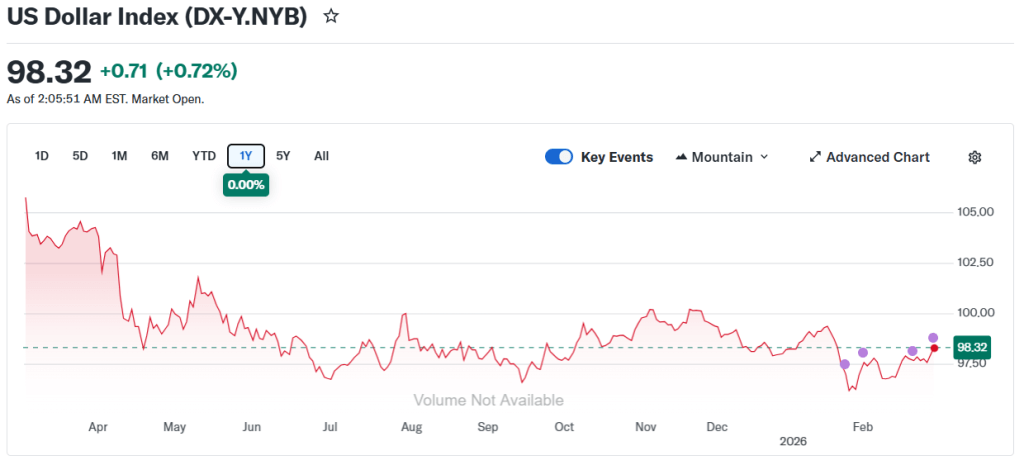
However, DXY futures gains were limited, in part, by concerns about policy uncertainty in Washington. A recent US Supreme Court decision that struck down broad reciprocal tariffs prompted President Donald Trump to use Section 122 of the Trade Act of 1974 to establish a new global tariff system. This added even more uncertainty to the macro outlook.
Euro futures (6E) stayed under pressure as investors remained concerned about a spike in risk and energy prices. Oil’s rise above $71 a barrel, driven by worries about shipping problems, spells bad news for the Eurozone economy, which depends on imports. Investors are now waiting for the first Eurozone HICP data, which could change perceptions of the European Central Bank’s reaction.
The British Pound futures (6B) also fell amid the stronger dollar and rise in geopolitical risks. Canadian Dollar futures (6C), on the other hand, held up relatively well, thanks to high crude prices, since Canada is a significant energy exporter to the US.
Meanwhile, Australian Dollar futures (6A) bounced back after a drop at the beginning of the week. This was due to a perception that the Reserve Bank of Australia could raise interest rates after the strong domestic inflation data release. Traders are still cautious ahead of key US releases, like the ISM Manufacturing PMI and the closely watched Nonfarm Payrolls report. These reports could set the tone for currency futures for the rest of the week.