

- Crude oil futures remain consolidating after a 5% gain in the past month.
- The prices find tough resistance amid oversupply concerns, stemming from the Venezuelan situation.
- Geopolitics and some supply disruption news limit the losses in oil, but are far from triggering an uptrend.
Crude oil futures remain in a tight range, with Brent crude dropping to around mid-64.00 on Thursday, while WTI stays near $60.55. Both are up about 5% over the past month, but that rally’s hitting a wall due to oversupply concerns.
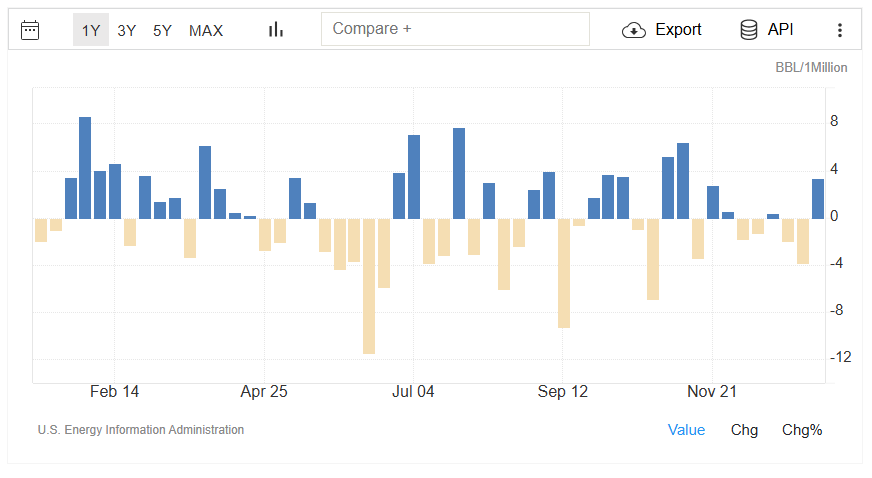
US crude inventories jumped 3.04 million barrels last week, and the Strategic Petroleum Reserve is now at 414.5 million barrels. Gasoline stockpiles surged another 6.2 million barrels, running 4% above normal for this time of year. Cushing inventories rose by 1.2 million barrels, too. Oil is piling up faster than anyone is buying it. US production slipped to 13.753 million bpd, but it’s still running 272,000 bpd above last year.
Globally, production fell to 107.41 million bpd in December, marking the third consecutive month of declines. But demand barely budged. The IEA only upped its 2026 forecast by 69,000 bpd to 104.98 million bpd. That’s not going to fix anything. Supply remains way ahead of demand, and capping further gains.
On the geopolitical front, Trump defused tensions this week by rescinding his threats to impose taxes on Europe over Greenland. For a brief period, this helped relieve tension. However, there is still uncertainty in the Arctic, so the bounce was not convincing. Trump has also been mouthing off about replacing Powell at the Fed, which has knocked the dollar around and helped oil a bit. However, worries about Fed independence have erased those gains.
There are small positive factors for oil, too. Kazakhstan’s Tengizchevroil shut down production at two oilfields after fires. US refiners are also buying cheap Venezuelan crude at massive discounts, $8.50-$9.50 below Brent. Even with geopolitical drama and supply disruptions sprinkled in, the fundamental problem stays the same; global oil supply is outpacing demand, and that’s keeping a lid on prices heading into 2026.