


- US equities maintain a solid momentum heading into 2026, with the S&P 500 marking its third consecutive year with a double-digit gain.
- AI capital spending and an easing Fed could keep the equities supported in 2026.
- Following an outsized rally, equities may experience a meaningful pullback.
US equities maintain firm momentum heading into 2026, despite persistent macroeconomic uncertainty and extreme policy volatility. Wall staged an impressive recovery after a deeper correction triggered during the spring amid Trump’s tariff announcement. AI enthusiasm, resilient corporate earnings, and easing trade fears contributed to the rally.
The S&P 500 closed 2025 with nearly 16% gains, marking a third straight year with a double-digit increase. At one instance, the index was down 19% from its Feb peak before initiating a rebound. On the other hand, the Nasdaq Composite once again outperformed, surging 20% due to optimism surrounding AI, while the Dow Jones closed the year with a 13% rise, despite limited exposure to high-growth tech stocks.
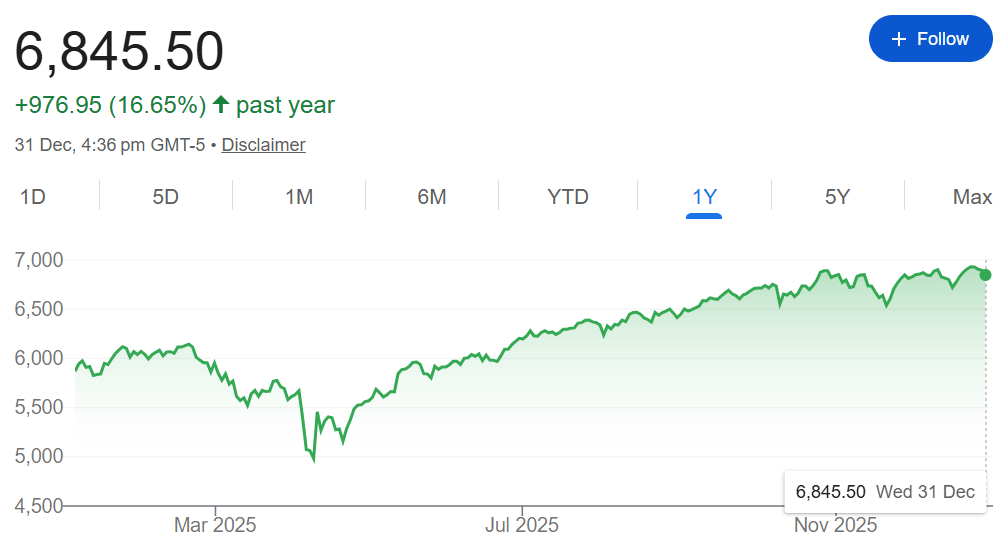
The recovery highlights the market’s ability to surge even during elevated political and economic risks. Strong corporate growth helped stocks absorb geopolitical chaos, tariff uncertainty, and shifting expectations from the Fed. Analysts further expect Fed easing in 2026, which could keep the equities supported.
However, the leadership concentration remains a key issue as the top five tech firms, Nvidia, Microsoft, Amazon, Apple, and Alphabet, account for 30% of the S&P 500. Although AI-driven capital spending justifies the outperformance, the current valuation in the tech sector has moved ahead of fundamentals. Meanwhile, recent earnings data suggest broader growth beyond mega-cap stocks, with medium-sized companies making meaningful contributions.
Looking forward, the 2026 expectations are positive but increasingly tempered. The Wall Street forecast for the S&P 500 ranges widely from single-digit to double-digit growth. Historically, the outsized rallying years are followed by meaningful pullbacks. Vanguard analysts anticipate subdued annualized returns over the next decade, reflecting elevated valuations.
On the other hand, political risk remains the biggest wild card with Trump’s pending appointment of a new Fed Chair. At the same time, continued trade talks and softening labor markets highlight the potential volatility in early 2026. Still, solid earnings, continued AI investment, and easing monetary policy are expected to provide a competitive edge to US equities in 2026.